Military
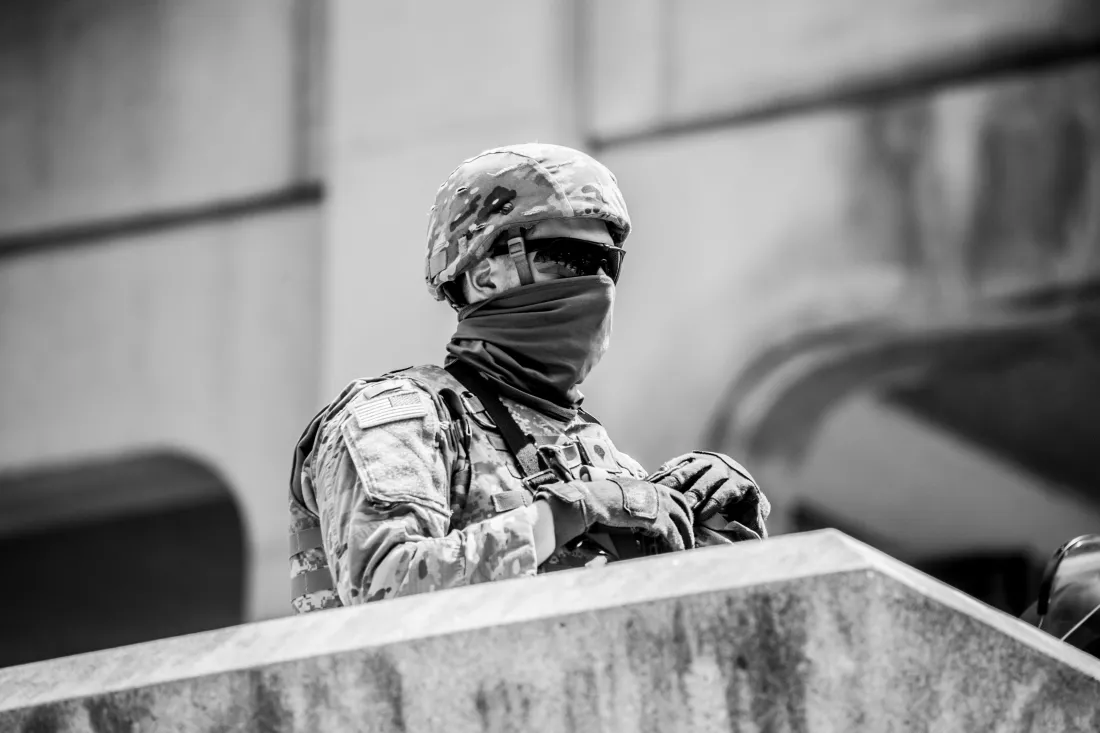
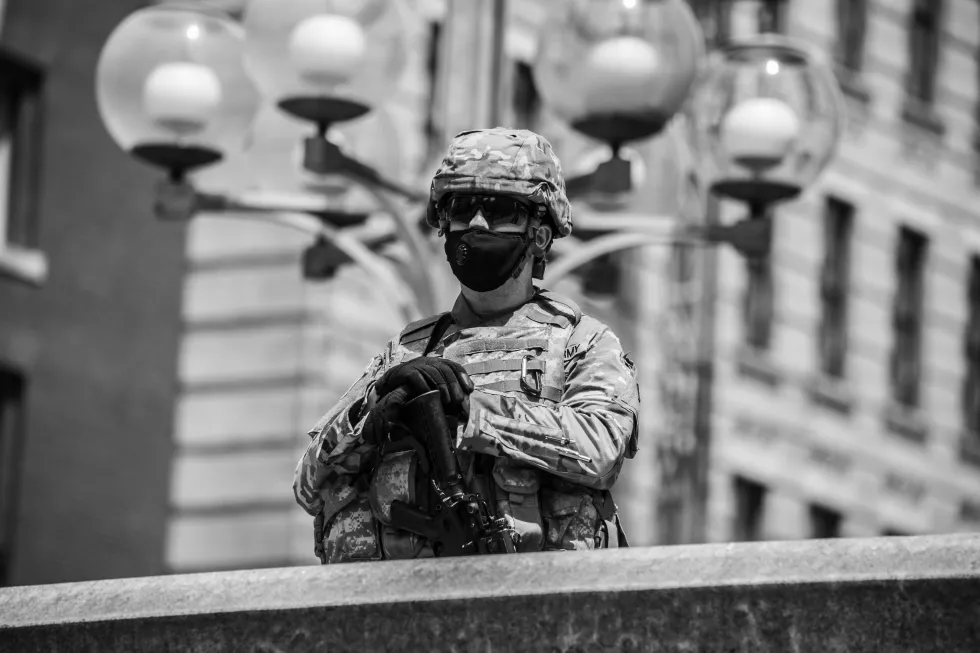
A military or armed force is a professional organization formally authorized by a sovereign state to use lethal or deadly force and weapons to support the interests of the state and some or all of its citizens. It typically consists of branches such as an Army, Navy, Air Force, and in certain countries the Marines and Coast Guard. The task of the military is usually defined as defence of the state, and its citizens, and the prosecution of war against another state. The military may also have additional sanctioned and non-sanctioned functions within a society, including, the promotion of a political agenda, protecting corporate economic interests, internal population control, construction, emergency services, social ceremonies, and guarding important areas. The military may also function as a discrete subculture within a larger civil society, through the development of separate infrastructures, which may include housing, schools, utilities, logistics, health and medical, law, food production, finance and banking.
Security
Security is freedom from, or resilience against, potential harm (or other unwanted coercive change) from external forces. Beneficiaries (technically referents) of security may be persons and social groups, objects and institutions, ecosystems, and any other entity or phenomenon vulnerable to unwanted change by its environment.
Military
Armies, the world over, destroy enemies' property when they can not use it; and even destroy their own to keep it from the enemy. Civilized belligerents do all in their power to help themselves, or hurt the enemy, except a few things regarded as barbarous or cruel. Among the exceptions are the massacre of vanquished foes, and non-combatants, male and female.
Abraham Lincoln, letter to James C. Conkling (26 August 1863)
Security
In the entire world, there is not a single establishment of the security industry that is not based on monopoly or on communism. … Political economy has disapproved equally of monopoly and communism in the various branches of human activity, wherever it has found them. Is it not then strange and unreasonable that it accepts them in the security industry?
Gustave de Molinari, tr. J. Huston McCulloch, §IV of The Production of Security (Auburn, AL: Ludwig von Mises Institute, 2009; orig. 1849), pp. 27–28.
Security
To minimize suffering and to maximize security were natural and proper ends of society and Caesar. But then they became the only ends, somehow, and the only basis of law — a perversion. Inevitably, then, in seeking only them, we found only their opposites: maximum suffering and minimum security.
Walter M. Miller, Jr., A Canticle for Leibowitz, Fiat Voluntas Tua, Ch. 29 (1959)