Gdańsk, Poland

International Logistics
(field of studies: Transport-Forwarding-Logistics)

Logistyka międzynarodowa

Bachelor's
Table of contents
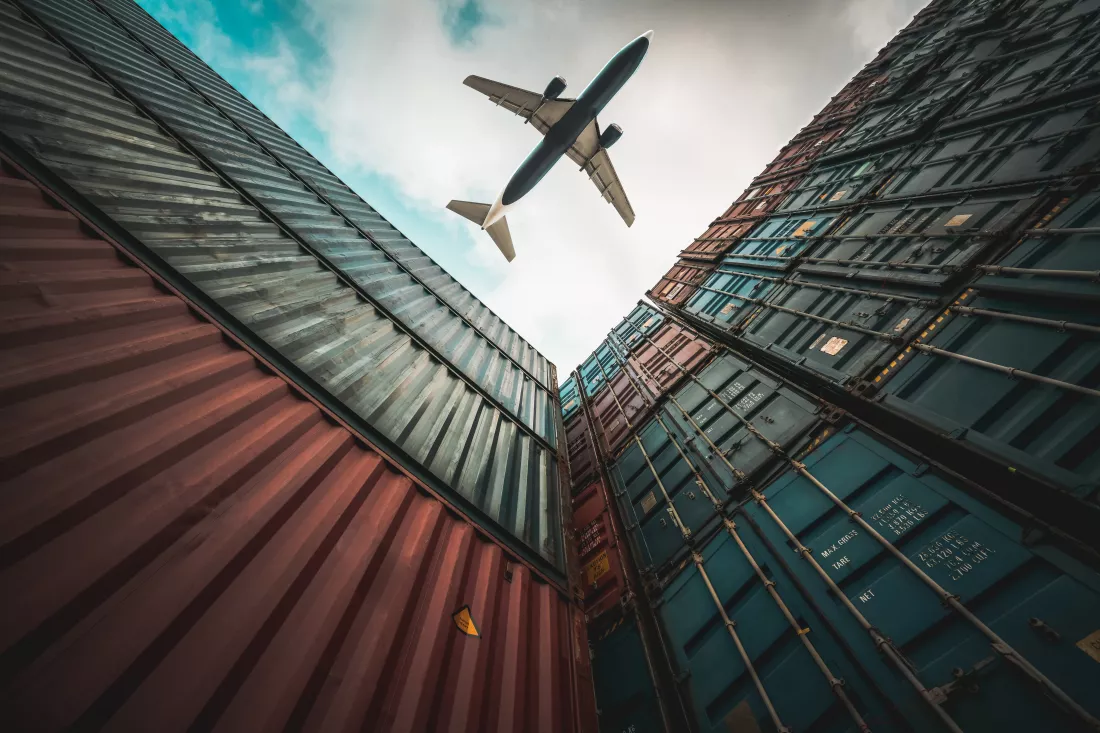
freight-airplane-flying-overseas-shipping-container

⇑International Logistics at Merito Gdańsk

Language: PolishStudies in Polish
Subject area: economy and administration
Kind of studies: full-time studies, part-time studies
  • Description:

  • pl
University website: www.merito.pl/english/gdansk

⇑Test: Is International Logistics the right fit for you?

logistics-students-scanning-boxes-in-a-warehouse

10 questions · two minutes

1. An online order must reach a customer on another continent in five days. How would you plan it?

2. How do you feel about planning – timetables, routes, delivery schedules?

3. A storm closes a major port and shipments are stuck. What would you do?

4. A warehouse is always running out of popular items. What would you suggest?

5. Classes are in English, with students from many countries. How do you feel?

6. How would you feel about visiting a distribution centre or a container terminal on a study trip?

7. A company wants to cut emissions from its deliveries. What could you propose?

8. How do you feel about using software and data to track shipments and optimise routes?

9. A customer calls angry because a delivery is late. How do you handle it?

10. What motivates you most to study International Logistics?

⇑Definitions and quotes

International
International mostly means something (a company, language, or organization) involving more than a single country. The term international as a word means involvement of, interaction between or encompassing more than one nation, or generally beyond national boundaries. For example, international law, which is applied by more than one country and usually everywhere on Earth, and international language which is a language spoken by residents of more than one country.
Logistics
Logistics is generally the detailed organization and implementation of a complex operation. In a general business sense, logistics is the management of the flow of things between the point of origin and the point of consumption in order to meet requirements of customers or corporations. The resources managed in logistics can include physical items such as food, materials, animals, equipment, and liquids; as well as abstract items, such as time and information. The logistics of physical items usually involves the integration of information flow, materials handling, production, packaging, inventory, transportation, warehousing, and often security.
Logistics
Decision theory can be pursued not only for the purposes of building foundations for political economy, or of understanding and explaining phenomena that are in themselves intrinsically interesting, but also for the purpose of offering direct advice to business and governmental decision makers. For reasons not clear to me, this territory was very sparsely settled prior to World War II. Such inhabitants as it had were mainly industrial engineers, students of public administration, and specialists in business functions, none of whom especially identified themselves with the economic sciences. Prominent pioneers included the mathematician, Charles Babbage, inventor of the digital computer, the engineer, Frederick Taylor and the administrator, Henri Fayol.
During World War II, this territory, almost abandoned, was rediscovered by scientists, mathematicians, and statisticians concerned with military management and logistics, and was renamed “operations research” or “operations analysis.” So remote were the operations researchers from the social science community that economists wishing to enter the territory had to establish their own colony, which they called “management science”.
Herbert A. Simon, "Rational decision making in business organizations." Nobel Prize lecture 1978, published in: The American economic review 69(4) (1979): 493-513;
Logistics
It would be foolish to describe the logistics hub as merely ugly, for it has the horrifying, soulless, immaculate beauty characteristic of many of the workplaces of the modern world.
Alain de Botton The Pleasures and Sorrows of Work (2009) p. 39
Logistics
Logistics is the ball and chain of armored warfare.
Heinz Guderian, Quoted in "Sword Point" - Page 141 - by Harold Coyle - 1988

Contact:

Aleja Grunwaldzka 238A
80-266 Gdańsk
Privacy Policy