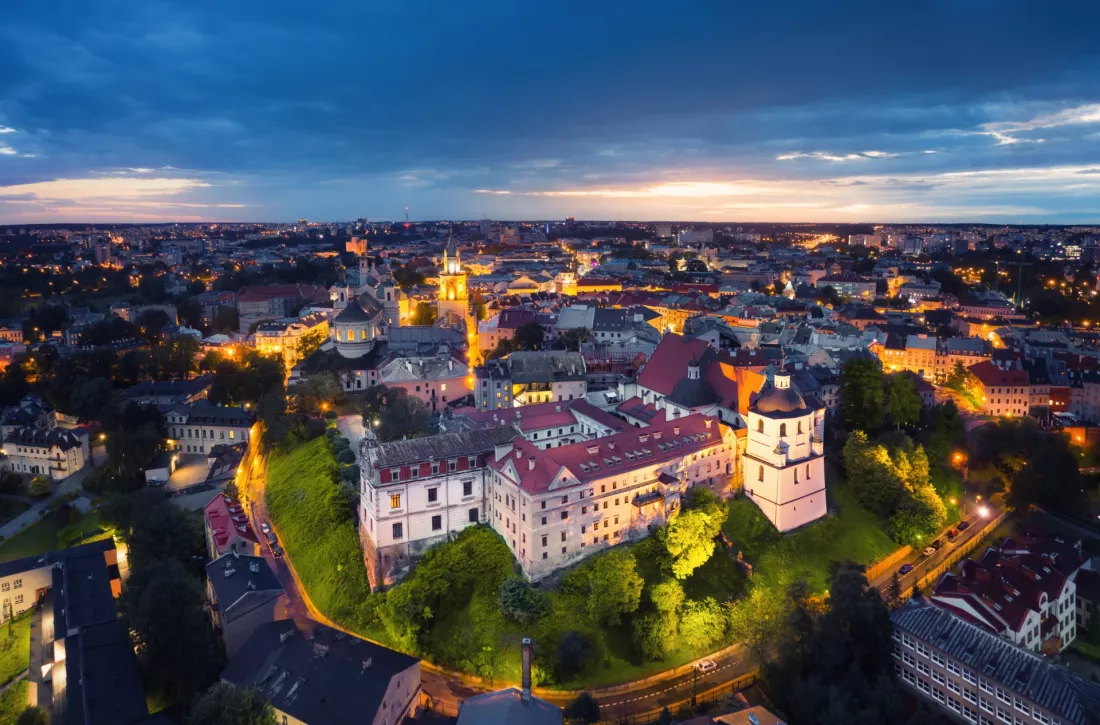
Lublin, Poland

Biology

Biologia

Master's
Table of contents
timothy-dykes-zVU_3H3cwjk-unsplash

⇑Biology at UMCS

Language: PolishStudies in Polish
Subject area: biology
Kind of studies: full-time studies
  • Description:

  • pl
University website: www.umcs.pl/en

⇑Why study Biology (Master's) at UMCS?

dlaczego-warto-studiowac-na-UMCS
Why study it:

Biology at Maria Curie-Skłodowska University in Lublin (UMCS) is a two-year, full-time Master's programme with a general academic profile, taught in English at the Faculty of Biology and Biotechnology as the Molecular Biology specialisation. It is meant for graduates of biology, biotechnology and related fields who want to understand life processes at the molecular level and build a career in research or the bio-industries.

Programme: molecular biology from microbes to bioinformatics

The core compulsory courses include:

  • advanced molecular biology and molecular microbiology
  • biochemistry and regulation of cellular processes
  • bioinformatics and synthetic biology
  • innovations in environmental microbiology and sustainable development
  • molecular biology in entrepreneurship

Specialisation: electives and theme modules

A large share of the programme is made up of electives you choose yourself – complementary courses in advanced genetics, proteomics and molecular modelling, and theme modules that let you specialise in molecular biology for medicine or for environment and industry.

The centrepiece is your own research project. You choose its topic and carry it out in the laboratory over three semesters under the supervision of an experienced promoter, and its results form the basis of your diploma dissertation.

Labs: more than half of the classes in the lab

Practical classes and laboratory training make up more than half of all classes, and you can also get directly involved in the Faculty's research projects, student scientific clubs and science events such as the Night of Biologists or the Lublin Science Festival. The study programme does not include an internship.

Exchanges: a semester abroad with Erasmus+

Through Erasmus+ and other exchange programmes you can spend one semester at a university abroad – for example in Belgium, France, Germany, Italy, Spain, Slovenia or Turkey. At UMCS itself you study in a multinational group with students from all over the world and an international team of academic teachers and researchers.

After graduation: research, biotech, pharma or a PhD

The programme follows European teaching standards. Graduates can work:

  • in public or private research institutions
  • in biotechnological, pharmaceutical, agro-industrial, health and environmental companies, as research staff or highly qualified laboratory technicians
  • in forensic laboratories and forensic medicine
  • as specialists in consultancy and training companies
  • or continue on to PhD studies

As of the 2026/27 admissions, based on the programme pages at irk.umcs.pl.
⇑Test: check whether Biology is the right major for you!

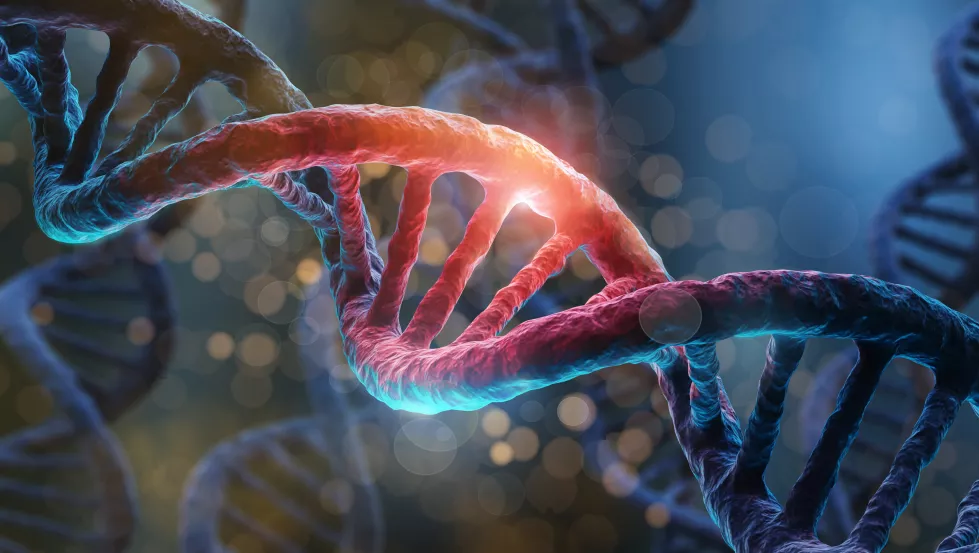
dna-helix-structure-closeup

Answer all questions to see if a Master's in Biology is the right next step for you!

1. Do you want to deepen your understanding of core biological principles at molecular, cellular, and organismal levels?

2. Are you interested in gaining advanced laboratory skills (e.g., molecular techniques, microscopy, field sampling)?

3. Do you want to engage in research on topics like ecology, evolution, genetics, developmental biology, or conservation?

4. Are you willing to participate in interdisciplinary projects combining biology with data science, chemistry, environmental science, or health?

5. Do you believe that a two-year master's in Biology will substantially enhance your academic or professional trajectory?

6. Are you interested in learning how to analyze biological data, including bioinformatics, statistical inference, or modeling?

7. Do you value ethical considerations in biological research, such as responsible experimentation, data integrity, and environmental impact?

8. Are you motivated to apply biological insight to real-world problems like health, biodiversity loss, or biotechnology?

9. Are you comfortable collaborating with biologists, chemists, data scientists, or policy experts to frame and solve complex biological questions?

10. What motivates you most to pursue a Master’s in Biology?

⇑Definitions and quotes

Biology
Biology is the natural science that involves the study of life and living organisms, including their physical structure, chemical composition, function, development and evolution. Modern biology is a vast field, composed of many branches. Despite the broad scope and the complexity of the science, there are certain unifying concepts that consolidate it into a single, coherent field. Biology recognizes the cell as the basic unit of life, genes as the basic unit of heredity, and evolution as the engine that propels the creation of new species. Living organisms are open systems that survive by transforming energy and decreasing their local entropy to maintain a stable and vital condition defined as homeostasis. See glossary of biology.
Biology
When you study science, and especially these realms of the biology of what makes us human, what's clear is that every time you find out something, that brings up ten new questions, and half of those are better questions than you started with.
Robert Sapolsky (2003) Emperor Has No Clothes Award acceptance speech
Biology
Today, nearly all biologists acknowledge that evolution is a fact.
Neil A. Campbell, Biology 2nd ed., 1990, Benjamin/Cummings, p. 434
Biology
I like to define biology as the history of the earth and all its life — past, present, and future. To understand biology is to understand that all life is linked to the earth from which it came; it is to understand that the stream of life, flowing out of the dim past into the uncertain future, is in reality a unified force, though composed of an infinite number and variety of separate lives.
Rachel Carson Preface to Humane Biology Projects (1961) by the Animal Welfare Institute

Contact:

Pl. Marii Curie-Sklodowskiej 5
20-031 Lublin
Department of Education
International Students Office
phone: (+48) 81 537 29 26
facebook International Student Office


StudentNews Group Websites for students and future students — in Poland since 2007, across Europe since 2014. Over 50 websites and millions of users a year (Google Analytics). Studies in Europe Universities in Europe Bachelor’s Master’s Doctorate MBA Study guide Work abroad Travel For partners Advertising and cooperation Reach (online report) Contact advertising@studentnews.eu © 2003–2026 Grupa StudentNews.pl sp. z o.o., Modlnica, Poland
Privacy Policy