
Warsaw, Poland

Informatics and Econometrics

Informatyka i ekonometria

Master's
Table of contents
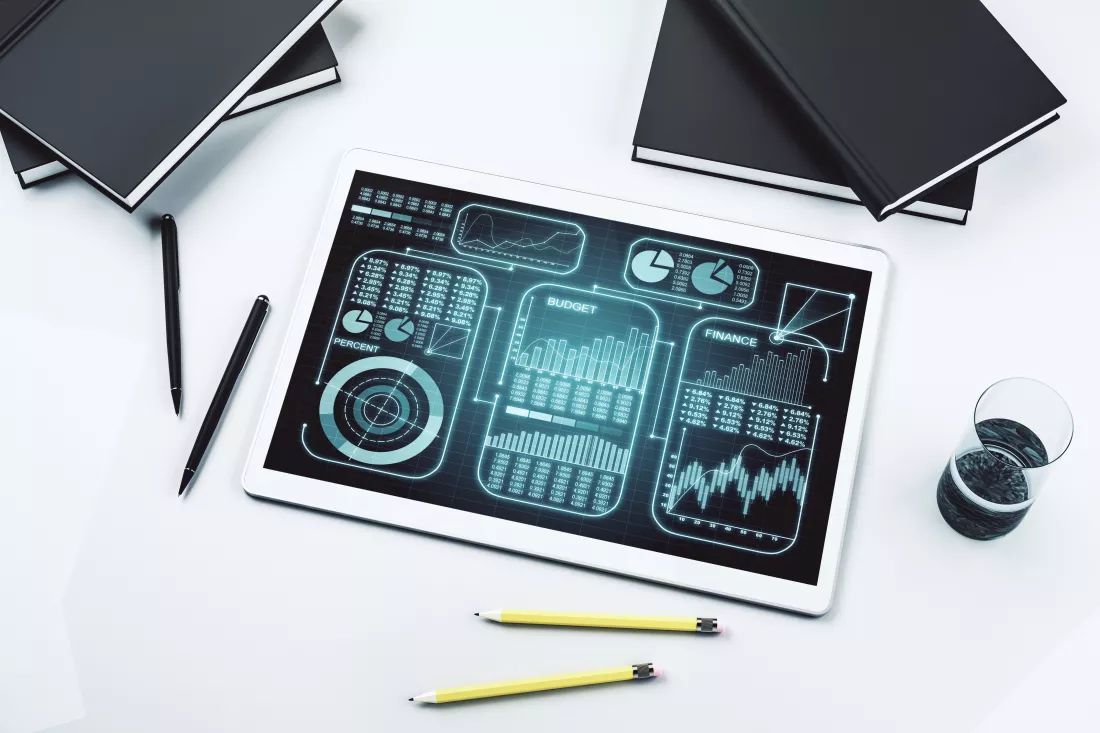
stats-data-illustration-modern-digital-tablet-monitor-computing-analytics-concept-top-view-3d-rendering

⇑Informatics and Econometrics at SGGW

Language: PolishStudies in Polish
Subject area: computer science
Kind of studies: full-time studies, part-time studies
  • Description:

  • pl
University website: www.sggw.edu.pl/en

⇑Why study Informatics and Econometrics (Master's) at the Warsaw University of Life Sciences – SGGW?

Dlaczego warto studiować w Szkole Głównej Gospodarstwa Wiejskiego w Warszawie
Why study it:

Informatics and Econometrics (Master's) at the Warsaw University of Life Sciences – SGGW is a two-year, English-taught second-cycle programme that leads to a master's degree. It is meant for people who want to analyse and model economic phenomena with mathematical, statistical and computing tools.

Programme: econometrics, data and programming

The programme combines the mathematical foundations of economics with practical work in statistical and computational tools. In the first year you study dynamic and financial econometrics, econometric modelling, microeconometrics, mathematical economics, multidimensional data analysis and survey sampling, next to object-oriented and advanced programming, software engineering, Oracle databases, network services and the foundations of artificial intelligence. Later come the theory of forecasting and simulations, the basics of financial engineering, event history analysis and statistical analysis in market research. Business ethics, project management and intellectual property management round off the curriculum before the master's seminar and thesis.

Specialisation: big data analytics

Big Data Analytics gives the programme its direction. The subject returns in successive semesters, supported by processing massive datasets, advanced data exploration techniques for big data and deep learning methods.

Languages: a second foreign language

In the first year you also take a second foreign language and choose between Polish, German, Russian and Spanish. All classes are taught in English, so you work with the terminology of data analysis and economics in English.

After graduation: banks, administration, research

Graduates can be employed in:

  • analytics departments of banks and financial advisory firms
  • brokerage houses
  • state and local administration
  • centres that process agricultural information for the EU Common Agricultural Policy
  • computer firms and scientific and research institutions

Based on the programme pages at sggw.edu.pl and the SGGW syllabus.
⇑Test: Is Informatics and Econometrics the right fit for you?

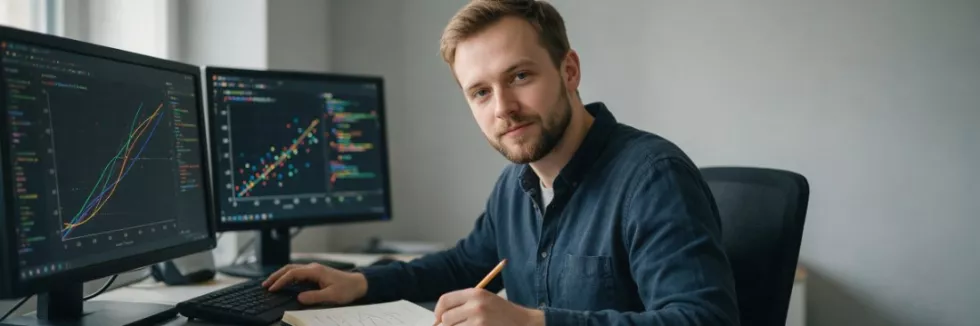
analyst-building-econometric-models-on-two-monitors

10 questions · two minutes

1. You have a large dataset on household spending. What would you most like to do with it?

2. Your regression shows a strong link between two variables. How do you treat the result?

3. How do you feel about programming in languages such as Python or R for data analysis?

4. A bank asks you to build a model predicting which clients may default on loans. How do you approach it?

5. How do you feel about time series – forecasting prices, demand or inflation?

6. Classes are in English, and you’ll work on data projects with students from many countries. How do you see that?

7. Would you like to design a database and data pipeline that feeds a company’s analytical reports?

8. You’re offered the chance to write a research paper based on your Master’s thesis. How do you react?

9. Which future role appeals to you most?

10. What motivates you most to pursue a Master’s degree in Informatics and Econometrics?

⇑Definitions and quotes

Econometrics
Econometrics is the application of statistical methods to economic data and is described as the branch of economics that aims to give empirical content to economic relations. More precisely, it is "the quantitative analysis of actual economic phenomena based on the concurrent development of theory and observation, related by appropriate methods of inference". An introductory economics textbook describes econometrics as allowing economists "to sift through mountains of data to extract simple relationships". The first known use of the term "econometrics" (in cognate form) was by Polish economist Paweł Ciompa in 1910. Jan Tinbergen is considered by many to be one of the founding fathers of econometrics. Ragnar Frisch is credited with coining the term in the sense in which it is used today.
Informatics
Informatics is a branch of information engineering. It involves the practice of information processing and the engineering of information systems, and as an academic field it is an applied form of information science. The field considers the interaction between humans and information alongside the construction of interfaces, organisations, technologies and systems. As such, the field of informatics has great breadth and encompasses many subspecialties, including disciplines of computer science, information systems, information technology and statistics. Since the advent of computers, individuals and organizations increasingly process information digitally. This has led to the study of informatics with computational, mathematical, biological, cognitive and social aspects, including study of the social impact of information technologies.
Econometrics
As an econ blogger, I get the sense that this is exactly how many Americans still think of economists--as self-appointed defenders of the free market, spinning theories to show that greed is good. Watching those old Milton Friedman videos, I wonder if that picture might have been accurate in the 1960s and 1970s. But some big things have changed in the field of economics, and America should know about them. Three big changes stand out in particular: Econ today is more data-driven, far less politically conservative, and in general much more like engineering than it used to be.
Noah Smith, "Economists used to be the priests of free markets--now they're just a bunch of engineers," Quartz, May 13, 2014.
Econometrics
Econometrics may be defined as the quantitative analysis of actual economic phenomena based on the concurrent development of theory and observation, related by appropriate methods of inference.
Paul Samuelson, Tjalling Koopmans, and Richard Stone. "Report of the evaluative committee for Econometrica." Econometrica- journal of the Econometric Society. (1954): 141-146.
Econometrics
Intermediate between mathematics, statistics, and economics, we find a new discipline which, for lack of a better name, may be called econometrics. Econometrics has as its aim to subject abstract laws of theoretical political economy or "pure" economics to experimental and numerical verification, and thus to turn pure economics, as far as possible, into a science in the strict sense of the word.
Ragnar Frisch (1926) "On a Problem in Pure Eco­nomics: Translated by JS Chipman." Preferences, Utility, and Demand: A Minnesota Symposium. 1926."

Contact:

Nowoursynowska 166 str.
02-787 Warszawa
tel. (48 22) 59 31 000
StudentNews Group Websites for students and future students — in Poland since 2007, across Europe since 2014. Over 50 websites and millions of users a year (Google Analytics). Studies in Europe Universities in Europe Bachelor’s Master’s Doctorate MBA Study guide Work abroad Travel For partners Advertising and cooperation Reach (online report) Contact advertising@studentnews.eu © 2003–2026 Grupa StudentNews.pl sp. z o.o., Modlnica, Poland
Privacy Policy