Częstochowa, Poland

Physical Education

Wychowanie fizyczne

Master's
Table of contents
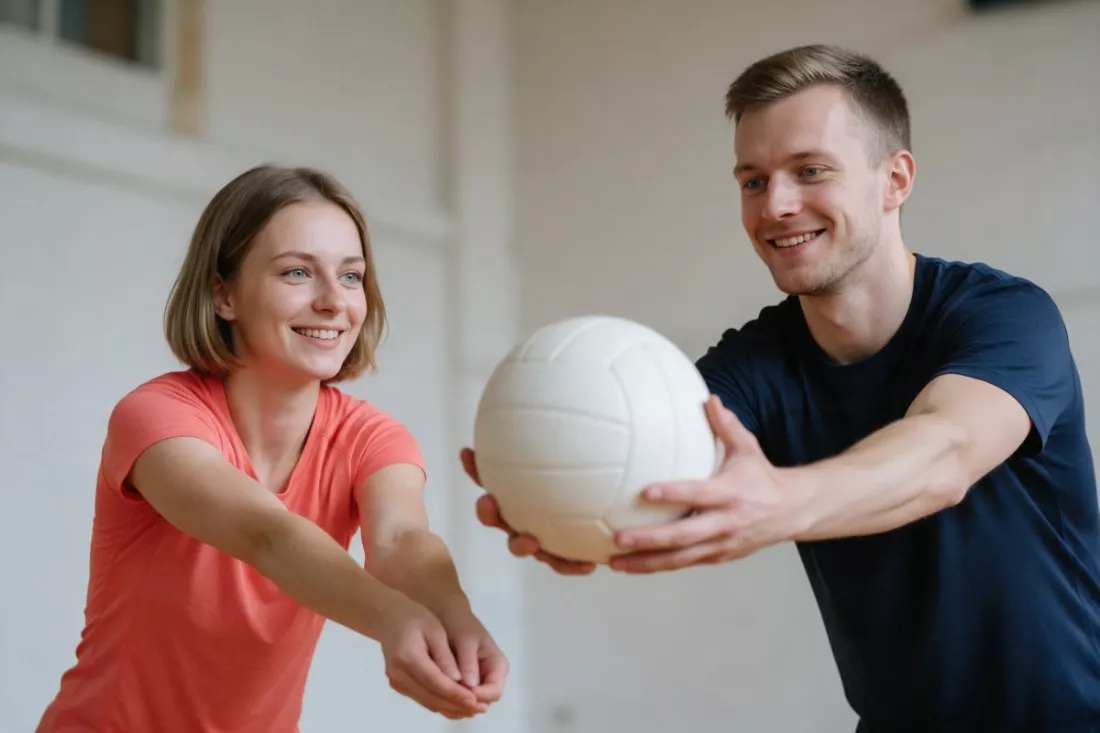
studenci-wychowania-fizycznego-cwicza-odbicia-siatkowki-w-hali

⇑Physical Education at UJD

Language: PolishStudies in Polish
Subject area: physical education, tourism, services
Kind of studies: full-time studies, part-time studies
  • Description:

  • pl

⇑Test: Is Physical Education the right fit for you?

postgraduate-pe-students-running-a-fitness-test-on-an-exercise-bike

10 questions · two minutes

1. On a school placement, you notice several pupils keep bringing in notes to get out of PE. What do you do?

2. You’re planning a whole term of lessons. How do you go about it?

3. One of the pupils in your group uses a wheelchair. How do you plan your lessons?

4. Seminars, research reviews and presentations will all be in English, and your group will include teachers and coaches from different countries. How does that sound?

5. You read a study showing that short activity breaks during lessons help pupils concentrate. What do you do with it?

6. How do you check whether the people you teach or coach are making progress?

7. Some parents ask how to get their child, who spends all their free time on screens, to be more active. What do you suggest?

8. An athlete you coach hasn’t improved for weeks and is losing motivation. How do you respond?

9. Where do you see yourself after your Master’s?

10. What motivates you most to pursue a Master’s degree in Physical Education?

⇑Definitions and quotes

Education
Education is the process of facilitating learning, or the acquisition of knowledge, skills, values, beliefs, and habits. Educational methods include storytelling, discussion, teaching, training, and directed research. Education frequently takes place under the guidance of educators, but learners may also educate themselves. Education can take place in formal or informal settings and any experience that has a formative effect on the way one thinks, feels, or acts may be considered educational. The methodology of teaching is called pedagogy.
Physical Education
Physical education, also known as Phys Ed., PE, Gym, or Gym class, and known in many Commonwealth countries as physical training or PT, is an educational course related of maintaining the human body through physical exercises (i.e. calisthenics). It is taken during primary and secondary education and encourages psychomotor learning in a play or movement exploration setting to promote health.
Education
It is provable both that the historical sequence was, in its main outlines, a necessary one; and that the causes which determined it apply to the child as to the race. ...as the mind of humanity placed in the midst of phenomena and striving to comprehend them has, after endless comparisons, speculations, experiments, and theories, reached its present knowledge of each subject by a specific route; it may rationally be inferred that the relationship between mind and phenomena is such as to prevent this knowledge from being reached by any other route; and that as each child's mind stands in this same relationship to phenomena, they can be accessible to it only through the same route. Hence in deciding upon the right method of education, an inquiry into the method of civilization will help to guide us.
Herbert Spencer, Education: Intellectual, Moral, and Physical (1861)
Education
What we need is to justify coercion, paternalistic control, blame, scolding, and punishment - all of which are less evident in trigonometry class than in a fourth grade learning long division.(...) I have argued that blame, scolding, and punishment in public schools - what I have called "the ordeal" - can be successfully defended. Students have a duty to learn, and can be held responsible for violating whatever rules, policies, or instructions are enforced to ensure that they do so.
Charles Howell - Syracuse University: Education, Punishment, and Responsibility
Education
Give me a dozen healthy infants, well-formed, and my own specified world to bring them up in and I'll guarantee to take any one at random and train him to become any type of specialist I might select – doctor, lawyer, artist, merchant-chief and, yes, even beggar-man and thief, regardless of his talents, penchants, tendencies, abilities, vocations, and race of his ancestors. I am going beyond my facts and I admit it, but so have the advocates of the contrary and they have been doing it for many thousands of years.
John B. Watson. Behaviorism (Revised edition). (1930). Chicago: University of Chicago Press. p.82.

Contact:

Waszyngtona str. 4/8
42-200 Częstochowa
phone +48 34 378 41 00
Privacy Policy