Częstochowa, Poland

Environmental Chemistry and Technology
(field of studies: Chemistry)

Chemia i technologia środowiska

Master's
Table of contents
lusia-komala-widiastuti-NdgBzWnDfYY-unsplash

⇑Environmental Chemistry and Technology at UJD

Field of studies: Chemistry
Language: PolishStudies in Polish
Subject area: physical science, environment
Kind of studies: full-time studies, part-time studies
  • Description:

  • pl
University website: www.en.ujd.edu.pl

⇑Test: Is Environmental chemistry and technology the right fit for you?

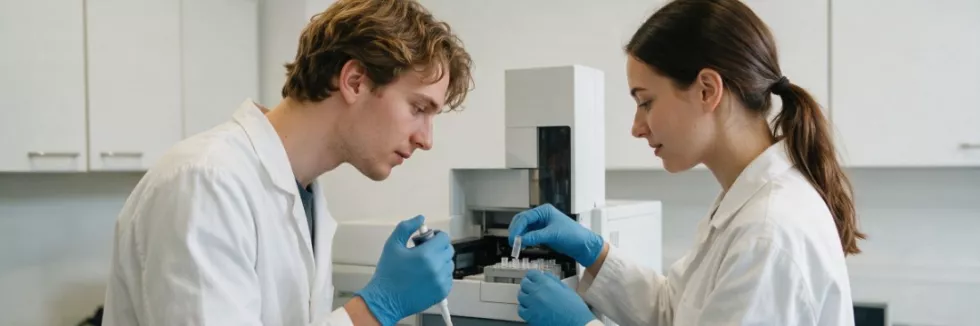
chemists-loading-water-samples-into-a-chromatograph

10 questions · two minutes

1. You need to measure trace levels of pharmaceuticals in river water. How would you go about it?

2. Your calibration curve looks odd and the blanks show contamination. What do you do?

3. A factory wants to cut its emissions of volatile organic compounds. How would you help?

4. How do you feel about working out what happens to a pesticide once it reaches soil and water?

5. You’re asked to redesign a process so it uses fewer hazardous solvents. How do you respond?

6. Lectures, lab reports and group projects are in English, with classmates from many countries. How do you feel about that?

7. How do you feel about long hours in an analytical lab with meticulous documentation and quality assurance?

8. Which treatment technology for removing micropollutants from water would you most like to explore?

9. Which future role sounds most like you?

10. What motivates you most to pursue a Master’s degree in Environmental chemistry and technology?

⇑Definitions and quotes

Chemistry
Chemistry is the scientific discipline involved with compounds composed of atoms, i.e. elements, and molecules, i.e. combinations of atoms: their composition, structure, properties, behavior and the changes they undergo during a reaction with other compounds. Chemistry addresses topics such as how atoms and molecules interact via chemical bonds to form new chemical compounds. There are four types of chemical bonds: covalent bonds, in which compounds share one or more electron(s); ionic bonds, in which a compound donates one or more electrons to another compound to produce ions (cations and anions); hydrogen bonds; and Van der Waals force bonds.
Technology
Technology ("science of craft", from Greek τέχνη, techne, "art, skill, cunning of hand"; and -λογία, -logia) is first robustly defined by Jacob Bigelow in 1829 as: "...principles, processes, and nomenclatures of the more conspicuous arts, particularly those which involve applications of science, and which may be considered useful, by promoting the benefit of society, together with the emolument [compensation ] of those who pursue them" .
Technology
We cannot idealize technology. Technology is only and always the reflection of our own imagination, and its uses must be conditioned by our own values. Technology can help cure diseases, but we can prevent a lot of diseases by old-fashioned changes in behavior.
President Bill Clinton Remarks at Knoxville Auditorium Coliseum, Knoxville, Tennessee (10 Oct 1996) while seeking re-election. American Presidency Project web page.
Chemistry
Like literature, philosophy is not distinguished from other subjects by a specific approach to a subject-matter independent of it. Chemistry deals with chemicals, biology with life and astronomy with very large, very distant objects. Philosophy can boast no such definite subject-matter.
David Wood (philosopher) (1990) Philosophy At The Limit. p. 69
Technology
What we are finding out now is that there are not only limits to growth but also to technology and that we cannot allow technology to go on without public consent.
David Brower Skeptic (Jul-Aug 1976).

Contact:

Waszyngtona str. 4/8
42-200 Częstochowa
phone +48 34 378 41 00
Privacy Policy