
Częstochowa, Poland

Chemistry

Chemia

Bachelor's
Table of contents
hans-reniers-lQGJCMY5qcM-unsplash

⇑Chemistry at UJD

Language: PolishStudies in Polish
Subject area: physical science, environment
Kind of studies: full-time studies, part-time studies
  • Description:

  • pl

⇑Why study Chemistry at UJD?

dlaczego-warto-studiowac-na-UJD
Why study it:

Chemistry at Jan Długosz University in Częstochowa (UJD) is a three-year (6-semester) Bachelor's programme (first-cycle) with a general academic profile, taught in English. It is intended for people interested in chemical sciences who want to learn chemistry mainly through laboratory experiments.

Programme: from synthesis to analysis

The programme builds on mathematics and natural sciences and covers, among others:

  • general chemistry together with physics, mathematics, biochemistry and materials engineering,
  • synthesis, purification, separation, composition analysis and structure determination of chemical compounds with classical and instrumental methods,
  • occupational health and safety, the safe use of chemicals and the law on chemical management,
  • interpreting, presenting and documenting the results of chemical experiments,
  • economics and entrepreneurship in small and medium-sized companies and the management of innovative projects.

Specialisation: Drug Chemistry or Chemistry in Forensics

You choose one of two specialisations. Drug Chemistry adds extended knowledge and skills in the methods used in the synthesis and analysis of drugs, in drug design and in obtaining medicinal substances.

Chemistry in Forensics focuses on forensic chemistry. You work with modern analytical apparatus, apply chromatographic and spectroscopic techniques, use computer equipment in your work and learn to interpret the results of analyses and draw correct conclusions from them.

Labs: mostly experimental classes

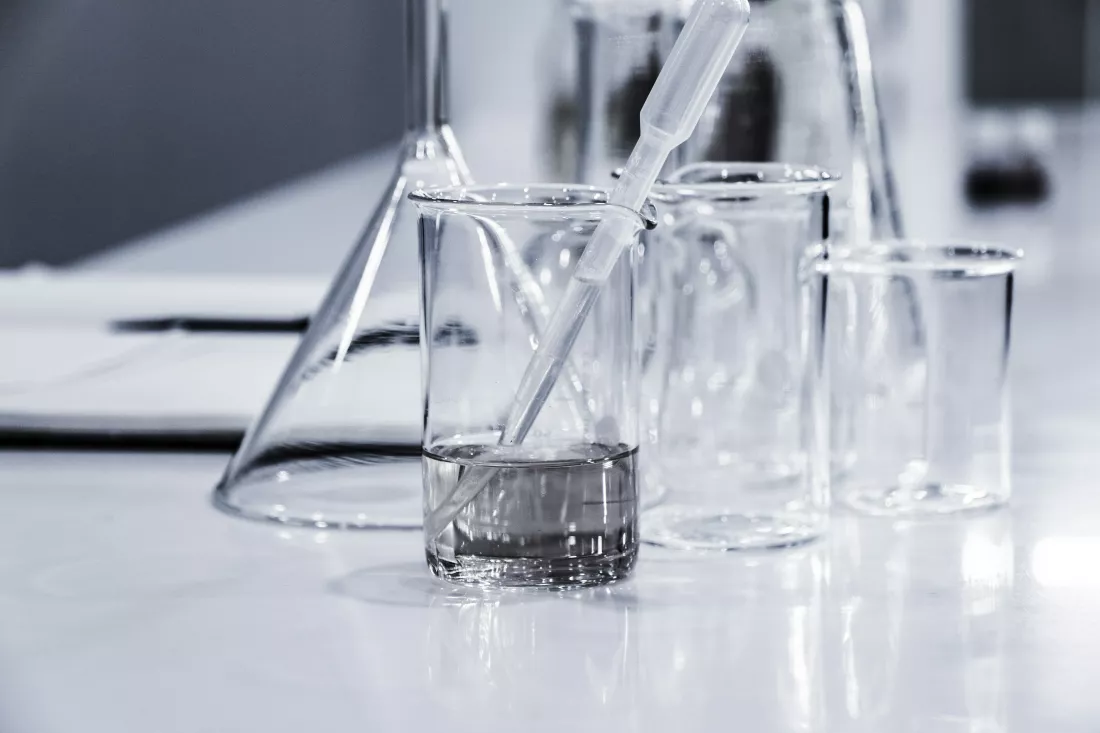
Classes are mostly experimental. You learn to solve chemical problems with contemporary analytical methods and modern analytical equipment – skills used in research and analytical laboratories of chemical and medical profile. The department also has its own computer lab, and student organisations and research clubs let you take your interests further.

Exchanges: Erasmus+ and COLOURS

International programmes and trips are available, for example within the Erasmus+ programme and the COLOURS European University.

After graduation: laboratories, industry and your own business

You can work in chemical, cosmetic and pharmacological laboratories – both industrial and research ones – and in industrial plants of the chemical and food sectors. Other options include education, science and administration, as well as marketing and sales departments of companies in the chemical, biotechnological, pharmaceutical and biomedical fields.

The programme also prepares you to start your own business in the chemical sector or to continue with second-cycle studies in Chemistry.

As of the 2026/27 admissions, based on the programme description at rekrutacja.ujd.edu.pl.
⇑Test: check whether Chemistry is the right major for you!

chemia

Find Out if Chemistry Is the Right Major for You!

1. Are you fascinated by how substances interact and transform through chemical reactions?

2. Do you enjoy hands-on laboratory work like mixing reagents, titrations, or synthesizing compounds?

3. Are you comfortable working with quantitative data, calculations, and precision measurements?

4. Are you interested in analytical techniques (e.g., spectroscopy, chromatography) to identify and quantify substances?

5. Does the idea of designing new materials, drugs, or sustainable chemicals motivate you?

6. Are you interested in understanding environmental chemistry and how chemical processes affect ecosystems?

7. Do you enjoy reading and interpreting scientific literature in chemistry?

8. Are you comfortable working across subfields (organic, inorganic, physical, analytical) to build a broad foundation?

9. Do you enjoy troubleshooting experiments and refining procedures when results don’t match expectations?

10. Do you like collaborating with others in research groups or industrial teams to tackle chemical challenges?

⇑Definitions and quotes

Chemistry
Chemistry is the scientific discipline involved with compounds composed of atoms, i.e. elements, and molecules, i.e. combinations of atoms: their composition, structure, properties, behavior and the changes they undergo during a reaction with other compounds. Chemistry addresses topics such as how atoms and molecules interact via chemical bonds to form new chemical compounds. There are four types of chemical bonds: covalent bonds, in which compounds share one or more electron(s); ionic bonds, in which a compound donates one or more electrons to another compound to produce ions (cations and anions); hydrogen bonds; and Van der Waals force bonds.
Chemistry
We may, I believe, anticipate that the chemist of the future who is interested in the structure of proteins, nucleic acids, polysaccharides, and other complex substances with high molecular weight will come to rely upon a new structural chemistry, involving precise geometrical relationships among the atoms in the molecules and the rigorous application of the new structural principles, and that great progress will be made, through this technique, in the attack, by chemical methods, on the problems of biology and medicine.
Linus Pauling, Nobel Lecture (11 December 1954)
Chemistry
You don't need something more to get something more. That's what emergence means. Life can emerge from physics and chemistry plus a lot of accidents. The human mind can arise from neurobiology and a lot of accidents, the way the chemical bond arises from physics and certain accidents. Doesn't diminish the importance of these subjects to know they follow from more fundamental things plus accidents.
Murray Gell-Mann (2007) TED talk on beauty and truth in physics — video TC 14m48s (March 2007)
Chemistry
Chemists usually write about their chemical careers in terms of the different areas and the discrete projects in those areas on which they have worked. Essentially all my chemical investigations, however, are in only one area, and I tend to view my research not with respect to projects, but with respect to where I’ve been driven by two passions which I acquired in graduate school: I am passionate about the Periodic Table (and selenium, titanium and osmium are absolutely thrilling), and I am passionate about catalysis. What the ocean was to the child, the Periodic Table is to the chemist; new catalytic reactivity is, of course, my personal coelacanth.
K. Barry Sharpless, Nobel lecture, 2001

Contact:

Waszyngtona str. 4/8
42-200 Częstochowa
phone +48 34 378 41 00
Privacy Policy