Częstochowa, Poland

Chemistry in Forensics
(field of studies: Forensics and Security Systems)

Chemia w kryminalistyce

Bachelor's
Table of contents
science-chemistry-formula-illustration-science-glass

⇑Chemistry in Forensics at UJD

Language: PolishStudies in Polish
Subject area: physical science, environment
Kind of studies: full-time studies, part-time studies
  • Description:

  • pl
University website: www.en.ujd.edu.pl

⇑Test: Is Chemistry in Forensics the right fit for you?

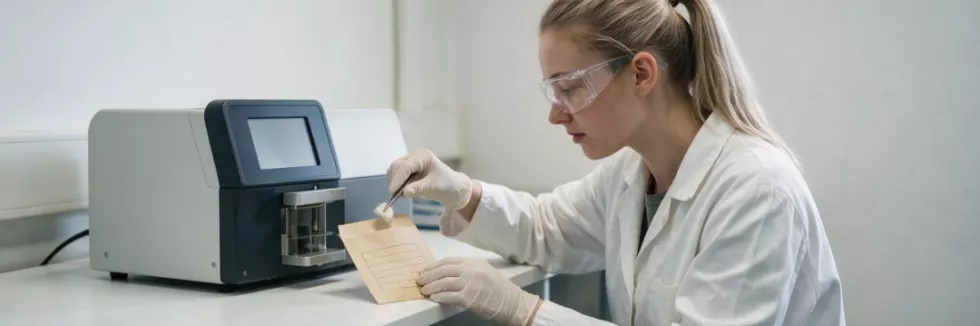
forensic-chemistry-student-handling-a-fibre-sample-in-a-lab

10 questions · two minutes

1. A white powder is found at a crime scene. What would you most like to do?

2. How do you feel about extremely careful, repetitive lab work where one mistake could ruin the evidence?

3. Which topic would you most like to explore?

4. You have to document every sample: who handled it, when and where it was stored. How do you react?

5. How do you feel about working with toxic substances, blood samples or unpleasant materials?

6. Two lab tests on the same sample give different results. What do you do?

7. The programme is taught in English, and you’ll share the lab with students from many countries. How do you feel about that?

8. Imagine explaining your lab results to a court as an expert witness. How does that sound?

9. How do you get on with chemistry and biology at school?

10. What motivates you most to study Chemistry in Forensics?

⇑Definitions and quotes

Chemistry
Chemistry is the scientific discipline involved with compounds composed of atoms, i.e. elements, and molecules, i.e. combinations of atoms: their composition, structure, properties, behavior and the changes they undergo during a reaction with other compounds. Chemistry addresses topics such as how atoms and molecules interact via chemical bonds to form new chemical compounds. There are four types of chemical bonds: covalent bonds, in which compounds share one or more electron(s); ionic bonds, in which a compound donates one or more electrons to another compound to produce ions (cations and anions); hydrogen bonds; and Van der Waals force bonds.
Chemistry
We can no more have exact religious thinking without theology, than exact mensuration and astronomy without mathematics, or exact iron-making without chemistry,
John Hall (Presbyterian pastor) (1895) Dictionary of Burning Words of Brilliant Writers p. 580.
Chemistry
It is a mistake to confound Alchemy with Chemistry. Modern Chemistry is a science which deals merely with the external forms in which the element of matter is manifesting itself. It never produces anything new. We may mix and compound and decompose two or more chemical bodies an unlimited number of times, and cause them to appear under various different forms, but at the end we will have no augmentation of substance, nor anything more than the combinations of the substances that have been employed at the beginning. Alchemy does not mix or compound anything, it causes that which already exists in a latent state to become active and grow. Alchemy is, therefore, more comparable to botany or agriculture than to Chemistry; and, in fact, the growth of a plant, a tree, or an animal is an alchemical process going on in the alchemical laboratory of nature, and performed by the great Alchemist, the power of God acting in nature.
Franz Hartmann. (1890) In the Pronaos of the Temple of Wisdom, containing the History of the True and the False Rosicrucians. p. 129
Chemistry
Once you are there you'll be like a drop of water in a piece of rock crystal- your medium will dignify your commonness.
Thomas Hardy, A Pair of Blue Eyes, 1873

Contact:

Waszyngtona str. 4/8
42-200 Częstochowa
phone +48 34 378 41 00
Privacy Policy