
Warsaw, Poland

Computer Science

Informatyka

Bachelor's - engineer
Table of contents
digital-composite-image-businessman-using-laptop-with-binary-codes

⇑Computer Science at PJATK

Language: PolishStudies in Polish
Subject area: computer science
Kind of studies: full-time studies, part-time studies
Studies online Studies online
  • Description:

  • pl

The first four semesters of the full-time programme  (and the first six of the part-time programme) are devoted to core instruction. At this stage, the student gains the fundamental knowledge required of a bachelor-level graduate in computer science. S/he is familiarised with issues such as basic database techniques, principles of software development and computer network development as well as applications of multimedia. Above all, the candidate learns to program in key languages such as Java or C++.  The curriculum also includes core mathematics, electronics, accounting, economics and law.

During the subsequent specialised instruction, students choose a major (area of specialisation) in which to further expand their knowledge and skills. Specialised classes are customised for each major; examples include programming in languages such as Prolog, ML, Assembler, C# or SQL. Furthermore, specialised instruction aims to build up the student’s team-working skills through, among others, implementation of specific projects.

Graduates receive the Engineer degree.

⇑Why study Computer Science at the Polish-Japanese Academy of Information Technology?

Dlaczego warto studiować w Polsko-Japońskiej Akademii Technik Komputerowych
Why study it:

Computer Science is a Bachelor of Engineering programme at the Polish-Japanese Academy of Information Technology (PJAIT), taught in English. It is for people who want to start working on real IT projects from the first semesters, with or without earlier programming experience.

Programme: projects from the first semester

From the very beginning you work on projects, learn to code, practise teamwork and get to know the technologies used by today's technology companies. The programme is designed so that beginners can build their programming skills step by step, while those with experience find room to go further. You also meet the latest AI tools, and traditional mathematics – algebra, calculus and statistics – is taught because it helps you understand algorithms, data analysis and advanced artificial intelligence techniques.

Specialisation: choosing a specialised area

In the second year of full-time studies you choose one specialised area, or two at once, from a broad offer, including:

  • Databases and Software Engineering and Business Applications
  • Network and System Programming, and Mobile device networks
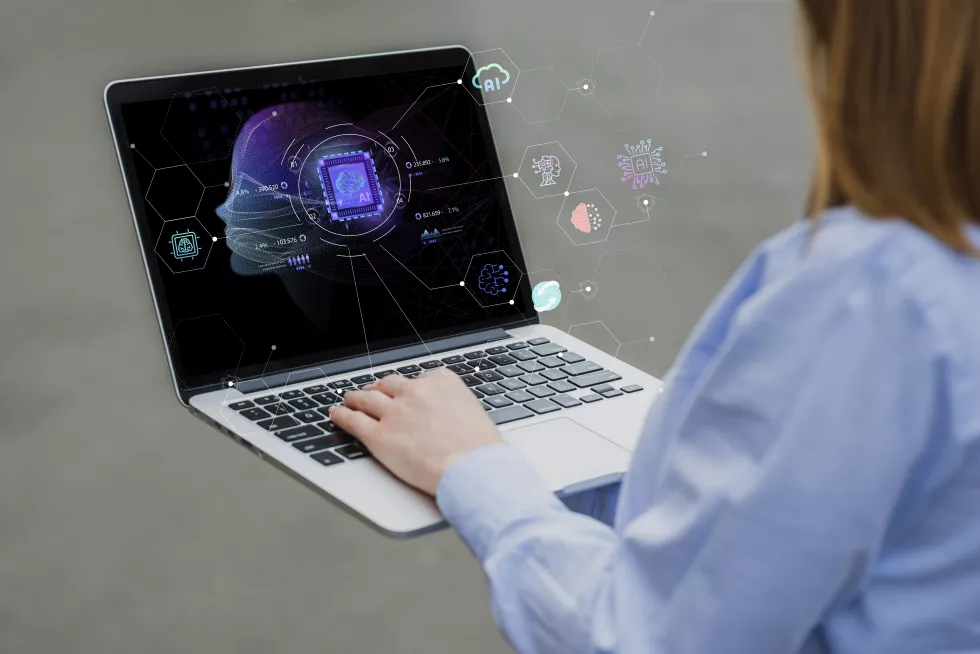
  • Intelligent Systems and Data Science, and Multimedia and AI
  • Robotics and Intelligent Autonomous Systems
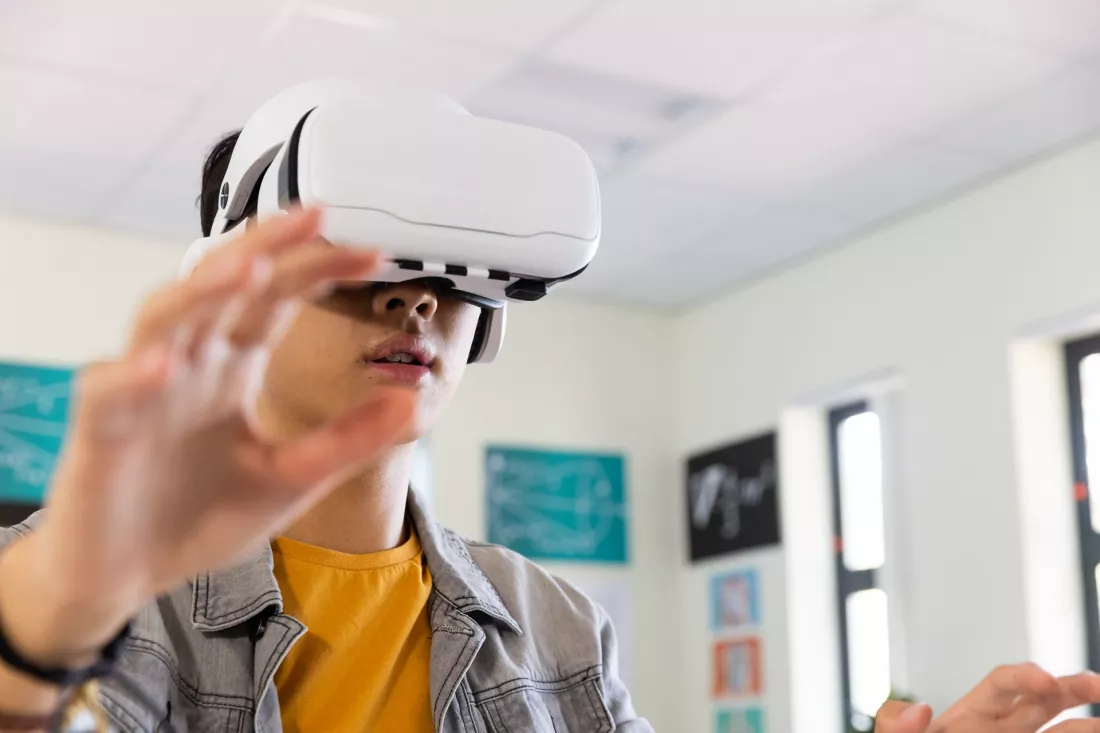
  • eXtended Reality, Immersive Games and Systems
  • Cybersecurity and Cloud Computing Management

Placements: internship during your studies

Practical skills are central to the curriculum, which includes project work and laboratories. Cooperation with leading technology companies in Poland lets you gain experience through an internship while you are still studying, and the Bachelor's programme requires one. Many students find their first job early, helped by job fairs on campus, and you can also develop your own projects and join research clubs.

Exchanges: a summer in Japan

You can apply for an internship on Awaji Island, offered through the Pasona Group Summer Scholarship, which gives students a chance to work and learn in Japan.

After graduation: further academic path

The engineering degree prepares you for work in a fast-changing technology sector.

You can then continue to the master's programmes, which focus on specialised expertise and advanced research projects with industry partners, and later to the Doctoral School.

Based on the programme pages at pja.edu.pl.
⇑Test: find out if Computer Science is the right direction for you!

people-generating-images-using-artificial-intelligence-laptop

Test your fit: Is Computer Science right for you?

1. How confident are you in solving logical puzzles and brainteasers?

2. Rate your enthusiasm for writing code in different programming languages.

3. How do you feel about analyzing algorithms and data structures?

4. To what extent do you enjoy troubleshooting errors in your work?

5. How motivated are you to master mathematical concepts used in computing?

6. How do you perceive team-based software development projects?

7. Are you eager to keep learning new frameworks and technologies?

8. How comfortable are you with abstract and theoretical concepts?

9. Do you enjoy exploring how hardware and software interact?

10. What drives you most towards a career in Computer Science?

⇑Definitions and quotes

Computer
A computer is a device that can be instructed to carry out sequences of arithmetic or logical operations automatically via computer programming. Modern computers have the ability to follow generalized sets of operations, called programs. These programs enable computers to perform an extremely wide range of tasks.
Computer Science
Computer science is the study of the theory, experimentation, and engineering that form the basis for the design and use of computers. It is the scientific and practical approach to computation and its applications and the systematic study of the feasibility, structure, expression, and mechanization of the methodical procedures (or algorithms) that underlie the acquisition, representation, processing, storage, communication of, and access to, information. An alternate, more succinct definition of computer science is the study of automating algorithmic processes that scale. A computer scientist specializes in the theory of computation and the design of computational systems. See glossary of computer science.
Science
Science (from Latin scientia, meaning "knowledge") is a systematic enterprise that builds and organizes knowledge in the form of testable explanations and predictions about the universe.
Science
I was particularly interested in that, in working on Jurassic Park that aspect of what are the negative parts. Because in talking with the people who were doing this kind of research what I was hearing was that the most responsible of them were deciding not to proceed down certain lines of inquiry which is really a new phase in science. Traditionally in science what the scientists themselves have said is: "I might as well do it, because if I don't, someone else will. It is going to happen inevitably." I think there's recognition now, that it's no so inevitable and it's quite conceivable that if I don't do this research neither will anyone else. It's simply too dangerous.
Michael Crichton, interview Lost World section of Beyond Jurassic Park DVD.
Computer Science
Indeed, one of my major complaints about the computer field is that whereas Newton could say, "If I have seen a little farther than others, it is because I have stood on the shoulders of giants," I am forced to say, "Today we stand on each other's feet." Perhaps the central problem we face in all of computer science is how we are to get to the situation where we build on top of the work of others rather than redoing so much of it in a trivially different way. Science is supposed to be cumulative, not almost endless duplication of the same kind of things.
Richard Hamming, 1968 Turing Award lecture, Journal of the ACM 16 (1), January 1969, p. 7
Computer Science
Interviewer: Is studying computer science the best way to prepare to be a programmer? Bill Gates: No. the best way to prepare is to write programs, and to study great programs that other people have written. In my case, I went to the garbage cans at the Computer Science Center and I fished out listings of their operating system. You got to be willing to read other people's code, then write your own, then have other people review your code. You've got to want to be in this incredible feedback loop where you get the world-class people to tell you what you're doing wrong.
Bill Gates cited in: "Programmers at Work: Interviews With 19 Programmers Who Shaped the Computer Industry", Tempus, by Susan Lammers (Editor)

Contact:

Koszykowa str. 86
02-008 Warsaw
phone: (+48) 22 58 44 500
fax: (+48) 22 58 44 501
StudentNews Group Websites for students and future students — in Poland since 2007, across Europe since 2014. Over 50 websites and millions of users a year (Google Analytics). Studies in Europe Universities in Europe Bachelor’s Master’s Doctorate MBA Study guide Work abroad Travel For partners Advertising and cooperation Reach (online report) Contact advertising@studentnews.eu © 2003–2026 Grupa StudentNews.pl sp. z o.o., Modlnica, Poland
Privacy Policy