Łódź, Poland

Design

Wzornictwo

Master's
Table of contents
Design study

⇑Design at WSSiP

Language: PolishStudies in Polish
Subject area: arts
Kind of studies: full-time studies, part-time studies
  • Description:

  • pl

⇑Test: Is Design the right fit for you?

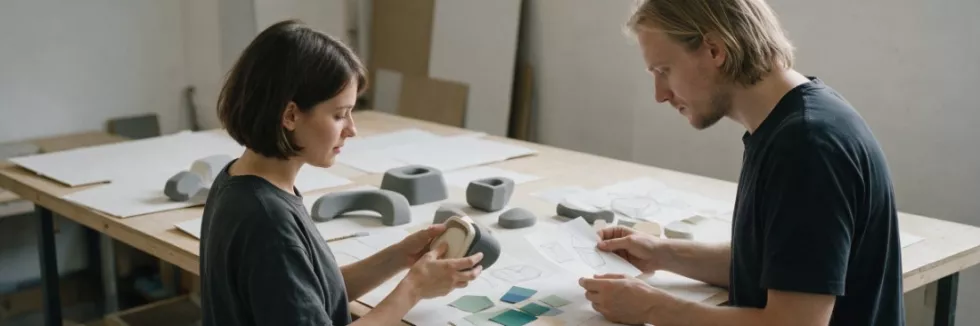
designers-testing-cardboard-prototypes-in-a-studio

10 questions · two minutes

1. A client’s brief is vague: “make our service feel friendlier”. Where do you start?

2. User testing shows that people struggle with a prototype you really love. How do you react?

3. How do you feel about writing about design theory and defending your project conceptually?

4. How much do you think about materials, product life cycles and environmental impact in your work?

5. You’re asked to lead a project team of engineers, marketers and developers. How do you feel?

6. The programme is taught in English, and you’ll take part in studio work and critiques with designers from many countries. How do you feel about that?

7. How do you feel about developing a distinctive personal approach in your portfolio?

8. How do you feel about prototyping – moving from sketches to physical or digital models through many iterations?

9. Which future role sounds most like you?

10. What motivates you most to pursue a Master’s degree in Design?

⇑Definitions and quotes

Design
Design is the creation of a plan or convention for the construction of an object, system or measurable human interaction (as in architectural blueprints, engineering drawings, business processes, circuit diagrams, and sewing patterns). Design has different connotations in different fields (see design disciplines below). In some cases, the direct construction of an object (as in pottery, engineering, management, coding, and graphic design) is also considered to use design thinking.
Design
Design is redesign.
Jan Michl (2002), in "On seeing design as redesign" (Scandinavian Journal of Design History 12, 2002: 7-23.)
Design
Disguise and complication are hindrances, both to good construction and good design, and as complication and disguise are expensive and wasteful... the interests of good art and true economy run on parallel lines.
Ernest Flagg, Small Houses: Their Economic Design and Construction (1922)
Design
One of the best ways to economize in building is to economize on ugliness. ...Nothing can be greater service in avoiding ugliness than a knowledge of the principles of design.
Ernest Flagg, Small Houses: Their Economic Design and Construction (1922)

Contact:

Targowa 65 str.
90-324 Łódź
tel. 570 010 654, 570 600 141
Dean's office:
tel. (42) 307 15 38
Privacy Policy