Gdynia, Poland

Internal Security

Bezpieczeństwo wewnętrzne

Master's
Table of contents
studenci-cwicza-pierwsza-pomoc-na-fantomie

⇑Internal Security at WSAiB

Language: PolishStudies in Polish
Subject area: security services
Kind of studies: full-time studies, part-time studies
Studies online Studies online
  • Description:

  • pl

⇑Test: Is Internal Security the right fit for you?

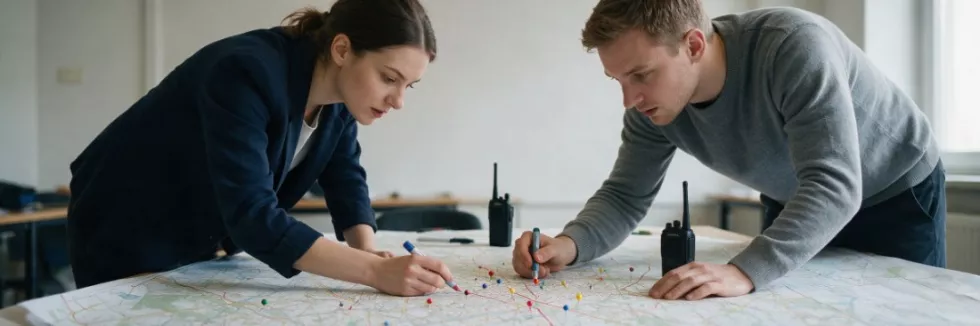
students-planning-evacuation-routes-on-a-city-map

10 questions · two minutes

1. In a seminar, you’re asked to analyse how local services responded to a major flood. Where do you start?

2. During an internship, your manager asks you to assess the risks around a large open-air concert. What do you do?

3. Seminars, case studies and reports will be in English, and your group will include people from countries with very different security systems. How do you feel about that?

4. A debate breaks out over expanding CCTV in city centres. What’s your take?

5. A wave of false rumours online sparks panic in a town. How do you see the role of the authorities?

6. In a crisis-management exercise, you’re put in charge of coordinating the police, fire service and local officials. How do you approach it?

7. Which kind of dissertation topic appeals to you most?

8. You notice a colleague at work is handling sensitive information carelessly. What do you do?

9. Where do you see yourself after graduating?

10. What motivates you most to pursue a Master’s degree in Internal Security?

⇑Definitions and quotes

Security
Security is freedom from, or resilience against, potential harm (or other unwanted coercive change) from external forces. Beneficiaries (technically referents) of security may be persons and social groups, objects and institutions, ecosystems, and any other entity or phenomenon vulnerable to unwanted change by its environment.
Security
We must plan for freedom, and not only for security, if for no other reason than only freedom can make security more secure.
Karl Popper, The Open Society and Its Enemies (1945)
Security
Everywhere, men resign themselves to the most extreme sacrifices rather than do without government and hence security, without realizing that in so doing, they misjudge their alternatives.Suppose that a man found his person and his means of survival incessantly menaced; wouldn't his first and constant preoccupation be to protect himself from the dangers that surround him?  This preoccupation, these efforts, this labor, would necessarily absorb the greater portion of his time, as well as the most energetic and active faculties of his intelligence.  In consequence, he could only devote insufficient and uncertain efforts, and his divided attention, to the satisfaction of his other needs.
Even though this man might be asked to surrender a very considerable portion of his time and of his labor to someone who takes it upon himself to guarantee the peaceful possession of his person and his goods, wouldn't it be to his advantage to conclude this bargain?
Still, it would obviously be no less in his self-interest to procure his security at the lowest price possible.
Gustave de Molinari, tr. J. Huston McCulloch, §I of The Production of Security (Auburn, AL: Ludwig von Mises Institute, 2009; orig. 1849), pp. 20–21.
Security
No nation can make itself secure by seeking supremacy over all others. We all share responsibility for each other’s security, and only by working to make each other secure can we hope to achieve lasting security for ourselves.
Kofi Annan, Address at the Truman Presidential Museum and Library, Independence, Missouri, USA (11 December 2006)

Contact:

Kielecka 7 str.
81-303 Gdynia
phone: +48 58 660 74 49
Skype: edu_poland
international@wsaib.pl
Privacy Policy