Cracow, Poland

Ethnology and Cultural Anthropology

Etnologia i antropologia kulturowa

Table of contents
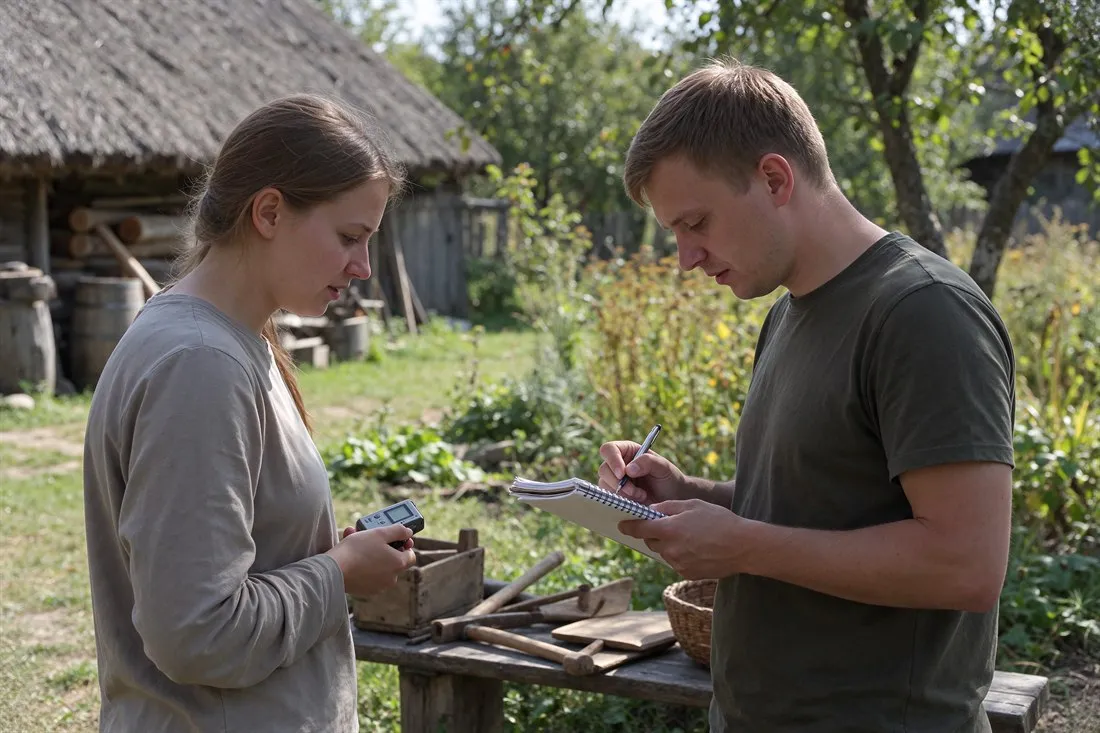
Kobieta i mężczyzna notują rozmowę o dawnych narzędziach na wsi

⇑Ethnology and Cultural Anthropology at UJ

Language: Polish Studies in Polish
Subject area: humanities

⇑Test: czy szkoła doktorska w dyscyplinie „Etnologia i antropologia kulturowa” to dobra droga dla Ciebie?

Badacze notują rozmowę o dawnych narzędziach na wsi

10 pytań · dwie minuty

1. Doktorat z antropologii to kilka lat badań jednej społeczności lub praktyki kulturowej. Jak to widzisz?

2. Promotor akceptuje temat, ale wybór miejsca, rozmówców i terminów pobytu w terenie zależy od Ciebie. Jak to widzisz?

3. Wyniki trzeba opisać w artykule lub monografii, zwykle po angielsku, i przedstawić na konferencji. Jak się z tym czujesz?

4. Ktoś zarzuca Ci, że opisujesz społeczność zbyt powierzchownie i z zewnątrz. Jak reagujesz?

5. Doktorant prowadzi też zajęcia, na których opowiada o badaniach nad kulturami. Jak to oceniasz?

6. Badanie wymaga kilku miesięcy życia wśród ludzi, których poznajesz dopiero w terenie. Jak to znosisz?

7. W trakcie obserwacji uczestniczącej zaczynasz być traktowany lub traktowana jak swój. Co z tym robisz?

8. Rozmówcy opowiadają o rzeczach, o których nie chcą, aby wiedzieli inni. Jak się do tego odnosisz?

9. Badana społeczność ma wartości, które budzą Twój sprzeciw. Jak to wpływa na pracę?

10. Notatki terenowe, nagrania i zdjęcia gromadzą się szybciej, niż da się je opracować. Jak organizujesz materiał?

⇑Definitions and quotes

Anthropology
Anthropology is the study of humans and human behaviour and societies in the past and present. Social anthropology and cultural anthropology study the norms and values of societies. Linguistic anthropology studies how language affects social life. Biological or physical anthropology studies the biological development of humans.
Ethnology
Ethnology (from the Greek ἔθνος, ethnos meaning "nation") is the branch of anthropology that compares and analyzes the characteristics of different peoples and the relationship between them (cf. cultural, social, or sociocultural anthropology).
Anthropology
Anthropology is destined to revolutionise the political and the social sciences as radically as bacteriology has revolutionised the science of medicine.
M.G. de Lapouge cited in: Thorstein Veblen (1898) "Why is Economics Not an Evolutionary Science" in: The Quarterly Journal of Economics Volume 12, 1898.
Anthropology
The great attraction of cultural anthropology in the past was precisely that it seemed to offer such a richness of independent natural experiments; but unfortunately it is now clear that there has been a great deal of historical continuity and exchange among those "independent" experiments, most of which have felt the strong effect of contact with societies organized as modern states. More important, there has never been a human society with unlimited resources, of three sexes, or the power to read other people's minds, or to be transported great distances at the speed of light. How then are we to know the effect on human social organization and history of the need to scrabble for a living, or of the existence of males and females, or of the power to make our tongues drop manna and so to make the worse appear the better reason? A solution to the epistemological impotence of social theory has been to create a literature of imagination and logic in which the consequences of radical alterations in the conditions of human existence are deduced. It is the literature of science fiction. … [S]cience fiction is the laboratory in which extraordinary social conditions, never possible in actuality, are used to illumine the social and historical norm. … Science fiction stories are the Gedanken experiments of social science.
Richard Lewontin "The Last of the Nasties?" in New York Review of Books (2/29/96)
Anthropology
Adventure has no place in the anthropologists profession; it is merely one of those unavoidable drawbacks, which detract from his effective work through the incidental loss of weeks or months
Claude Lévi-Strauss (1955) Tristes Tropiques

Contact:

phone (+48 12) 663 11 00
Gołębia str. 24
31-007 Kraków
StudentNews Group Websites for students and future students — in Poland since 2007, across Europe since 2014. Over 50 websites and millions of users a year (Google Analytics). Studies in Europe Universities in Europe Bachelor’s Master’s Doctorate MBA Study guide Work abroad Travel For partners Advertising and cooperation Reach (online report) Contact advertising@studentnews.eu © 2003–2026 Grupa StudentNews.pl sp. z o.o., Modlnica, Poland
Privacy Policy