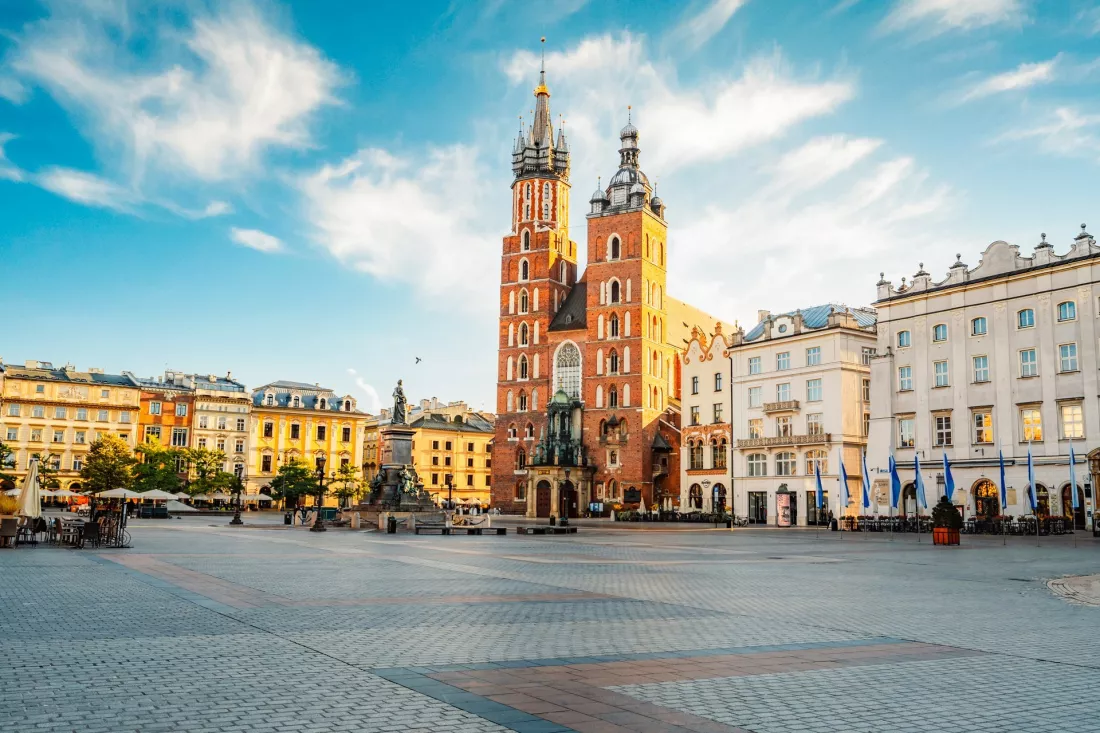
Cracow, Poland

Taxation of Real Estate and Real Estate Transactions

Opodatkowanie nieruchomości i obrotu nieruchomościami

Table of contents
Postgraduate diplomas

Taxation of Real Estate and Real Estate Transactions

⇑Taxation of Real Estate and Real Estate Transactions at UJ

⇑Test: sprawdź czy Opodatkowanie nieruchomości i obrotu nieruchomościami to studia dla Ciebie

10 pytań · dwie minuty
Taxation of Real Estate and Real Estate Transactions

10 pytań · dwie minuty

1. Klient chce sprzedać mieszkanie kupione kilka lat temu. Co sprawdzasz najpierw?

2. Deweloper pyta, jak rozliczać sprzedaż lokali na różnych etapach budowy. Jak pracujesz?

3. Klient wynajmuje kilka mieszkań i pyta o najlepszą formę opodatkowania. Co robisz?

4. Spółka chce wnieść nieruchomość aportem do innej spółki. Na co zwracasz uwagę?

5. Przepisy o obrocie nieruchomościami się zmieniają. Jak to wpływa na Twoją pracę?

6. Klient dostał w darowiźnie dom i chce go szybko sprzedać. Co mu doradzasz?

7. Urząd skarbowy kwestionuje rozliczenie sprzedaży działki Twojego klienta. Co robisz?

8. Inwestor kupuje działkę z budynkiem do wyburzenia. Co analizujesz od strony podatkowej?

9. Co najbardziej ciekawi Cię w podatkach od obrotu nieruchomościami?

10. Co najbardziej motywuje Cię do podjęcia studiów podyplomowych „Opodatkowanie nieruchomości i obrotu nieruchomościami”?

⇑Definitions and quotes

Real Estate
Real estate is "property consisting of land and the buildings on it, along with its natural resources such as crops, minerals or water; immovable property of this nature; an interest vested in this (also) an item of real property, (more generally) buildings or housing in general. Also: the business of real estate; the profession of buying, selling, or renting land, buildings, or housing." It is a legal term used in jurisdictions whose legal system is derived from English common law, such as India, the United Kingdom, United States, Canada, Pakistan, Australia, and New Zealand.
Taxation
It is true that the theory of our Constitution is, that all taxes are paid voluntarily; that our government is a mutual insurance company, voluntarily entered into by the people with each other; that each man makes a free and purely voluntary contract with all others who are parties to the Constitution, to pay so much money for so much protection, the same as he does with any other insurance company; and that he is just as free not to be protected, and not to pay any tax, as he is to pay a tax, and be protected.
But this theory of our government is wholly different from the practical fact.  The fact is that the government, like a highwayman, says to a man: Your money, or your life.  And many, if not most, taxes are paid under the compulsion of that threat.
The government does not, indeed, waylay a man in a lonely place, spring upon him from the road side, and, holding a pistol to his head, proceed to rifle his pockets.  But the robbery is none the less a robbery on that account; and it is far more dastardly and shameful.
The highwayman takes solely upon himself the responsibility, danger, and crime of his own act.  He does not pretend that he has any rightful claim to your money, or that he intends to use it for your own benefit.  He does not pretend to be anything but a robber.  He has not acquired impudence enough to profess to be merely a "protector," and that he takes men's money against their will, merely to enable him to "protect" those infatuated travellers, who feel perfectly able to protect themselves, or do not appreciate his peculiar system of protection.  He is too sensible a man to make such professions as these.  Furthermore, having taken your money, he leaves you, as you wish him to do.  He does not persist in following you on the road, against your will; assuming to be your rightful "sovereign," on account of the "protection" he affords you.  He does not keep "protecting" you, by commanding you to bow down and serve him; by requiring you to do this, and forbidding you to do that; by robbing you of more money as often as he finds it for his interest or pleasure to do so; and by branding you as a rebel, a traitor, and an enemy to your country, and shooting you down without mercy, if you dispute his authority, or resist his demands.  He is too much of a gentleman to be guilty of such impostures, and insults, and villainies as these.  In short, he does not, in addition to robbing you, attempt to make you either his dupe or his slave.
The proceedings of those robbers and murderers, who call themselves "the government," are directly the opposite of these of the single highwayman.
In the first place, they do not, like him, make themselves individually known; or, consequently, take upon themselves personally the responsibility of their acts.  On the contrary, they secretly (by secret ballot) designate some one of their number to commit the robbery in their behalf, while they keep themselves practically concealed.
Lysander Spooner, No Treason (1867–1870), No. VI: The Constitution of No Authority (1870), pp. 12–13
Taxation
Civil servants and priests, soldiers and ballet-dancers, schoolmasters and police constables, Greek museums and Gothic steeples, civil list and services list—the common seed within which all these fabulous beings slumber in embryo is taxation.
Karl Marx, Moralizing Criticism and Critical Morality (1847).
Taxation
Governments create nothing and have nothing to give but what they have first taken away — you may put money in the pockets of one set of Englishmen, but it will be money taken from the pockets of another set of Englishmen, and the greater part will be spilled on the way. Every vote given for Protection is a vote to give Governments the right of robbing Peter to pay Paul and charging the public a handsome commission on the job.
Winston Churchill, “Why I am a Free Trader,” Chapter I in T.W. Stead’s journal Coming Men on Coming Questions (April 13, 1905), bottom p. 9.

Contact:

phone (+48 12) 663 11 00
Gołębia str. 24
31-007 Kraków
StudentNews Group Websites for students and future students — in Poland since 2007, across Europe since 2014. Over 50 websites and millions of users a year (Google Analytics). Studies in Europe Universities in Europe Bachelor’s Master’s Doctorate MBA Study guide Work abroad Travel For partners Advertising and cooperation Reach (online report) Contact advertising@studentnews.eu © 2003–2026 Grupa StudentNews.pl sp. z o.o., Modlnica, Poland
Privacy Policy