Warsaw, Poland

Management of Cultural and Media Institutions

Zarządzanie instytucjami kultury i mediów

Table of contents
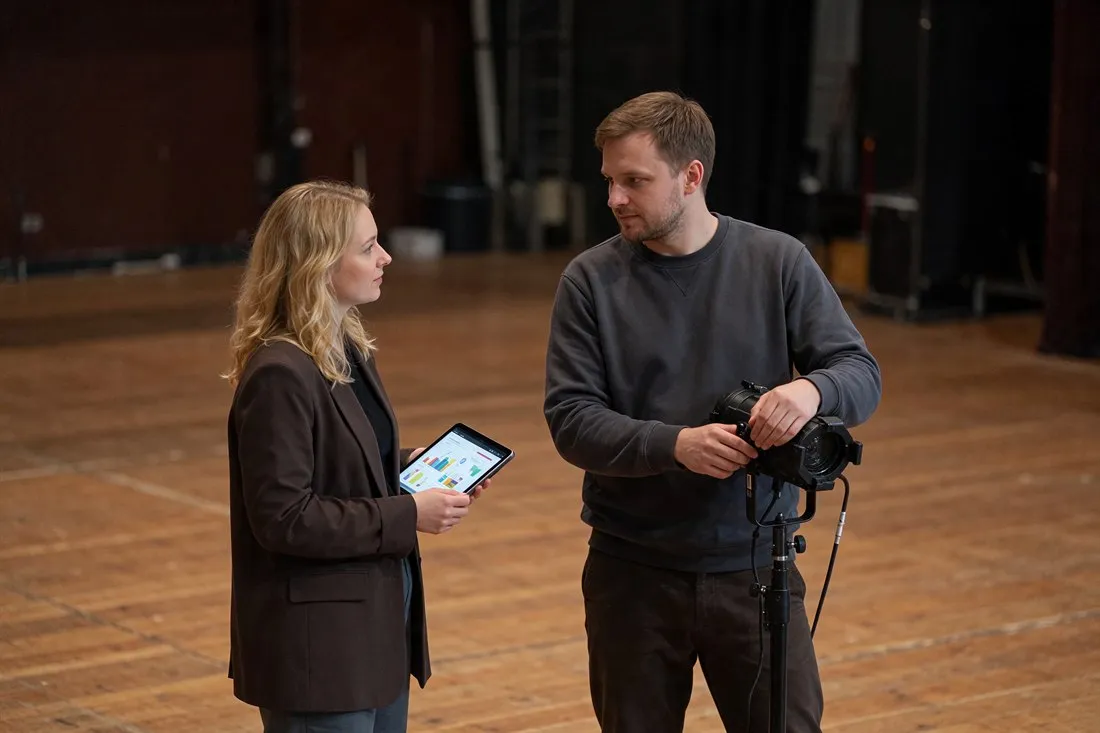
Menedżerka i technik omawiają wydarzenie na scenie teatru

⇑Management of Cultural and Media Institutions at SWBJ

Language: Polish Studies in Polish
Subject area: economy and administration
University website: warszawa.janski.edu.pl

⇑Test: sprawdź czy Zarządzanie instytucjami kultury i mediów to studia dla Ciebie

Menedżerka i technik omawiają wydarzenie na scenie teatru

10 pytań · dwie minuty

1. Na zajęcia dla dorosłych w domu kultury przychodzi coraz mniej osób. Co robisz jako osoba zarządzająca?

2. Lokalny portal informacyjny traci czytelników na rzecz mediów społecznościowych. Jaki masz plan?

3. Teatr miejski chce pozyskać sponsora festiwalu. Jak przygotowujesz rozmowę z firmą?

4. Artysta zaproszony do galerii wycofuje się z wystawy tuż przed otwarciem. Co robisz?

5. Redakcja radia chce przygotować audycję o sporze, który dzieli mieszkańców miasta. Jak do tego podchodzisz jako szef/szefowa?

6. Muzeum dostaje dotację na cyfryzację zbiorów. Na co ją przeznaczasz?

7. Doświadczeni pracownicy biblioteki niechętnie przyjmują pomysł nowych wydarzeń dla młodzieży. Co robisz?

8. Po premierze spektaklu w sieci pojawia się fala krytycznych komentarzy. Jak reagujesz?

9. Ośrodek kultury planuje budżet na kolejny rok. Jak dzielisz środki między działania?

10. Co najbardziej motywuje Cię do podjęcia studiów podyplomowych „Zarządzanie instytucjami kultury i mediów”?

⇑Definitions and quotes

Management
Management (or managing) is the administration of an organization, whether it is a business, a not-for-profit organization, or government body. Management includes the activities of setting the strategy of an organization and coordinating the efforts of its employees (or of volunteers) to accomplish its objectives through the application of available resources, such as financial, natural, technological, and human resources. The term "management" may also refer to those people who manage an organization.
Management
Management is defined here as the accomplishment of desired objectives by establishing an environment favorable to performance by people operating in organized groups. Each of the managerial functions (planning, organizing, staffing, , directing, and controlling) is analyzed and described in a systematic way. As this is done, both the distilled experience of practicing managers and the findings of scholars are presented. This is approached in such a way that the reader may grasp the relationships between each of the functions, obtain a clear view of the major principles underlying them.
Harold Koontz and Cyril O'Donnell. Principles of Management; An Analysis of Managerial Functions. 1968, p. 1
Management
In the long-run the workman may be as necessary to his master as his master is to him, but the necessity is not so immediate.
Adam Smith (1776) The Wealth of Nations Chapter VIII, p. 80
Management
In the past the man has been first; in the future the system must be first. This in no sense, however, implies that great men are not needed. On the contrary, the first object of any good system must be that of developing first-class men.
Frederick Winslow Taylor (1911) Principles of Scientific Management. p. 2
StudentNews Group Websites for students and future students — in Poland since 2007, across Europe since 2014. Over 50 websites and millions of users a year (Google Analytics). Studies in Europe Universities in Europe Bachelor’s Master’s Doctorate MBA Study guide Work abroad Travel For partners Advertising and cooperation Reach (online report) Contact advertising@studentnews.eu © 2003–2026 Grupa StudentNews.pl sp. z o.o., Modlnica, Poland
Privacy Policy