Lublin, Poland

Biology

Biologia

Master's
Table of contents
timothy-dykes-zVU_3H3cwjk-unsplash

Biology at UMCS

Language: PolishStudies in Polish
Subject area: biology
Kind of studies: full-time studies
  • Description:

  • pl
University website: www.umcs.pl/en

Why study Biology at UMCS?

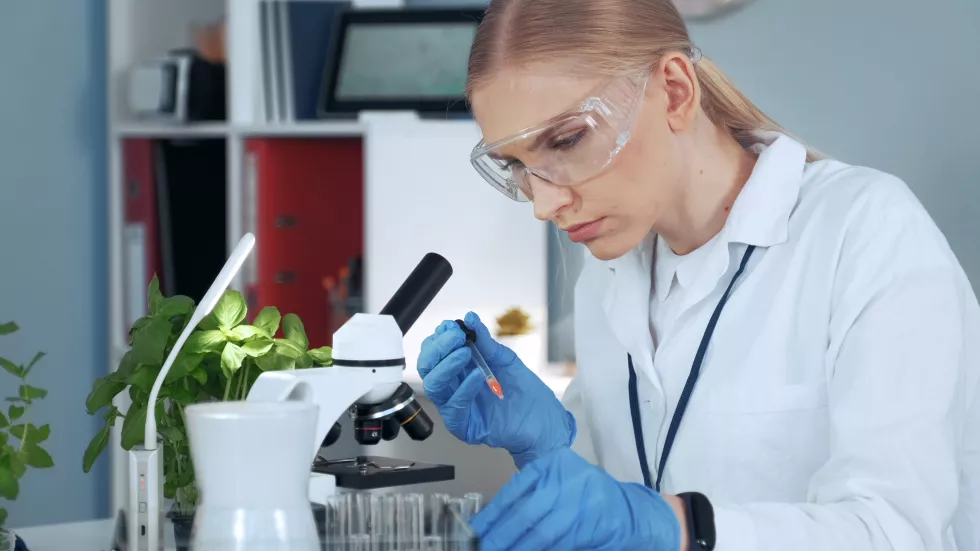
medical-research-scientist-safety-glasses-taking-sample-from-test-tube-with-pipette
Why It's Worth It:

Advanced Scientific Expertise

The Biology program at Maria Curie-Skłodowska University provides students with a profound understanding of the complex phenomena governing living organisms. This Master's degree program is designed for those who wish to transition from general biological knowledge to specialized expertise, focusing on the latest advancements in life sciences. By studying at this institution, participants gain access to a curriculum that balances rigorous theoretical frameworks with intensive laboratory practice.

Specialized Educational Pathways

Students can tailor their academic journey through various elective modules and specialization tracks that cover a wide range of biological disciplines. These tracks allow for in-depth exploration of areas such as experimental biology, environmental conservation, or microbiology. This flexibility ensures that every student can align their education with their personal career goals and scientific passions under the guidance of experienced academic staff.

Cutting-Edge Research Environment

Education at UMCS is deeply rooted in practical experience within modern laboratories equipped with high-end analytical tools. Students engage in sophisticated research projects involving molecular biology, biochemistry, and advanced microscopy. This hands-on approach ensures that graduates are not only familiar with scientific theories but are also proficient in the technical methodologies required in contemporary research facilities.

Fieldwork and Practical Training

Beyond the classroom, the program emphasizes the importance of direct observation and environmental analysis through field trips and professional internships. These activities provide a unique opportunity to study biodiversity and ecological processes in diverse habitats. Such practical exposure is vital for developing the ability to design experiments, collect biological samples, and conduct environmental monitoring in real-world scenarios.

Development of Analytical Skills

A significant focus of the curriculum is placed on developing critical thinking and the ability to process complex biological data. Students learn how to utilize statistical software and bioinformatic tools to interpret experimental results accurately. These analytical competencies are highly sought after in both the public and private sectors, where data-driven decision-making is essential for scientific and industrial progress.

Global Academic Opportunities

The university encourages international mobility, offering students the chance to participate in exchange programs and global research initiatives. This international perspective is crucial for a career in science, as it allows students to network with experts worldwide and gain experience in diverse academic cultures. Graduates are well-prepared to continue their education in doctoral schools or pursue research positions at prestigious international institutions.

Diverse Career Prospects

Graduates of the Biology program are equipped for a variety of professional roles in diagnostic laboratories, pharmaceutical companies, and environmental agencies. Their expertise is also valuable in the food industry, biotechnology firms, and organizations dedicated to nature conservation. The comprehensive training provided by the university ensures that alumni can adapt to the evolving demands of the global job market and contribute to solving modern biological challenges.


Test: check whether Biology is the right major for you!

dna-helix-structure-closeup

Answer all questions to see if a Master's in Biology is the right next step for you!

1. Do you want to deepen your understanding of core biological principles at molecular, cellular, and organismal levels?

2. Are you interested in gaining advanced laboratory skills (e.g., molecular techniques, microscopy, field sampling)?

3. Do you want to engage in research on topics like ecology, evolution, genetics, developmental biology, or conservation?

4. Are you willing to participate in interdisciplinary projects combining biology with data science, chemistry, environmental science, or health?

5. Do you believe that a two-year master's in Biology will substantially enhance your academic or professional trajectory?

6. Are you interested in learning how to analyze biological data, including bioinformatics, statistical inference, or modeling?

7. Do you value ethical considerations in biological research, such as responsible experimentation, data integrity, and environmental impact?

8. Are you motivated to apply biological insight to real-world problems like health, biodiversity loss, or biotechnology?

9. Are you comfortable collaborating with biologists, chemists, data scientists, or policy experts to frame and solve complex biological questions?

10. What motivates you most to pursue a Master’s in Biology?

Definitions and quotes

Biology
Biology is the natural science that involves the study of life and living organisms, including their physical structure, chemical composition, function, development and evolution. Modern biology is a vast field, composed of many branches. Despite the broad scope and the complexity of the science, there are certain unifying concepts that consolidate it into a single, coherent field. Biology recognizes the cell as the basic unit of life, genes as the basic unit of heredity, and evolution as the engine that propels the creation of new species. Living organisms are open systems that survive by transforming energy and decreasing their local entropy to maintain a stable and vital condition defined as homeostasis. See glossary of biology.
Biology
When you study science, and especially these realms of the biology of what makes us human, what's clear is that every time you find out something, that brings up ten new questions, and half of those are better questions than you started with.
Robert Sapolsky (2003) Emperor Has No Clothes Award acceptance speech
Biology
Today, nearly all biologists acknowledge that evolution is a fact.
Neil A. Campbell, Biology 2nd ed., 1990, Benjamin/Cummings, p. 434
Biology
Despite the beliefs and teachings of religion and psychology, impulses are biological and psychic directional signals to nudge the individual toward his or her greatest opportunities for expression and development privately, and also to insure the person's contribution to mass social reality.
Jane Roberts in The God of Jane: A Psychic Manifesto, p. 17

Contact:

Pl. Marii Curie-Sklodowskiej 5
20-031 Lublin
Department of Education
International Students Office
phone: (+48) 81 537 29 26
facebook International Student Office


Privacy Policy