Cognitive Science
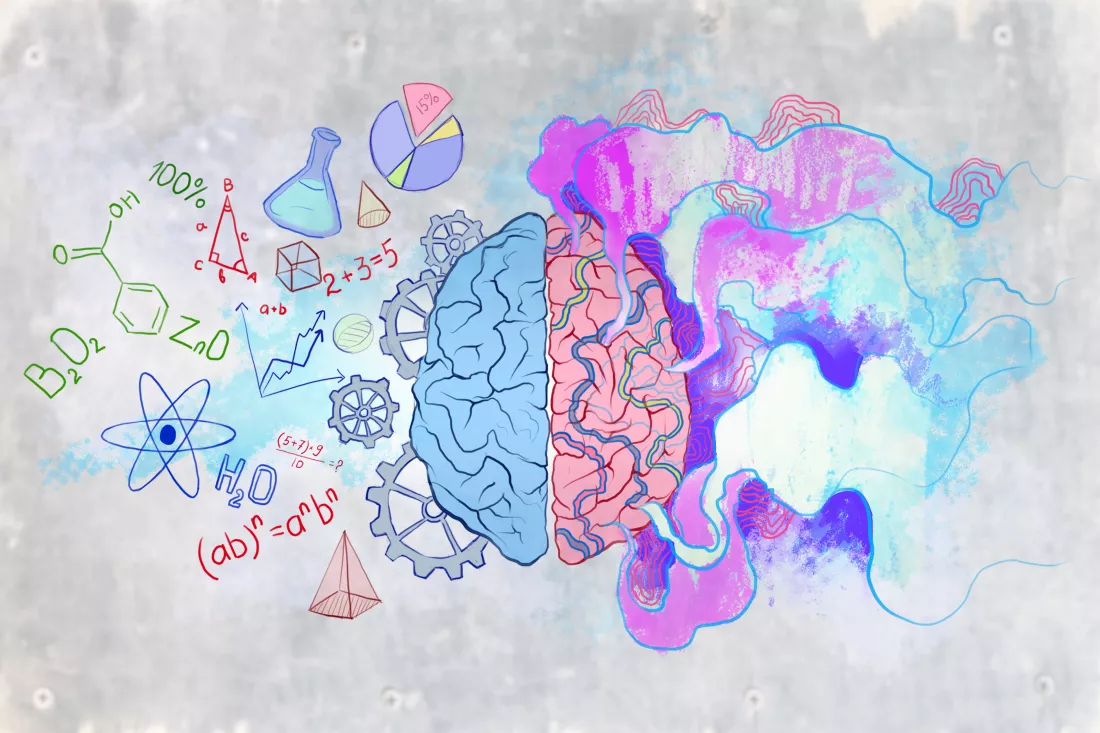
Cognitive science is the interdisciplinary, scientific study of the mind and its processes. It examines the nature, the tasks, and the functions of cognition (in a broad sense). Cognitive scientists study intelligence and behavior, with a focus on how nervous systems represent, process, and transform information. Mental faculties of concern to cognitive scientists include language, perception, memory, attention, reasoning, and emotion; to understand these faculties, cognitive scientists borrow from fields such as linguistics, psychology, artificial intelligence, philosophy, neuroscience, and anthropology. The typical analysis of cognitive science spans many levels of organization, from learning and decision to logic and planning; from neural circuitry to modular brain organization. The fundamental concept of cognitive science is that "thinking can best be understood in terms of representational structures in the mind and computational procedures that operate on those structures."
Science
I was particularly interested in that, in working on Jurassic Park that aspect of what are the negative parts. Because in talking with the people who were doing this kind of research what I was hearing was that the most responsible of them were deciding not to proceed down certain lines of inquiry which is really a new phase in science. Traditionally in science what the scientists themselves have said is: "I might as well do it, because if I don't, someone else will. It is going to happen inevitably." I think there's recognition now, that it's no so inevitable and it's quite conceivable that if I don't do this research neither will anyone else. It's simply too dangerous.
Michael Crichton, interview Lost World section of Beyond Jurassic Park DVD.
Science
The men in the laboratory... cannot be said to observe the actual objects of their curiosity at all. ...The sense data on which the propositions of modern science rest are, for the most part, little photographic spots and blurs, or inky curved lines on paper. ... What is directly observable is only a sign of the "physical fact"; it requires interpretation to yield scientific propositions.
Susanne Langer, Philosophy in a New Key (1942)